#01
Context
A flashcard app with three products inside it
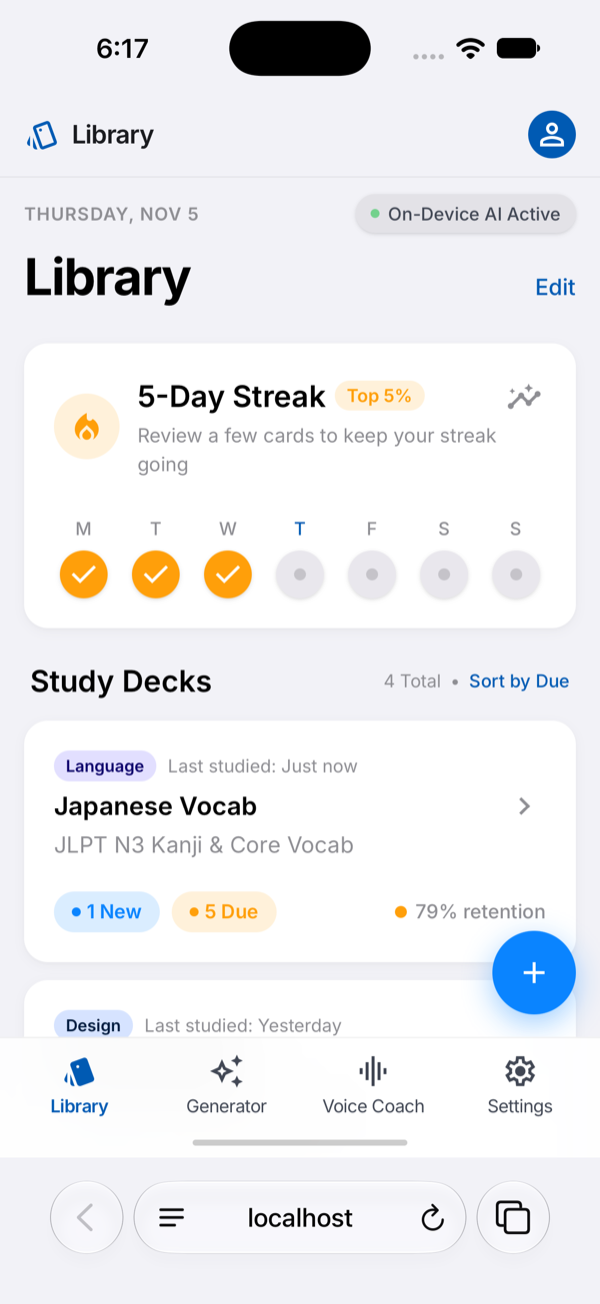
Aura combines three things: spaced repetition, AI card generation from pasted notes, and a voice coach for spoken answers. I started it because flashcard apps drilled without explaining, while AI chats explained but remembered nothing. I worked as solo PM with hands-on prototyping. The scope was the study loop, decks and settings; AI generation and voice quality were out of scope. The study screen was crowded and its numbers contradicted each other.
#02
Users & problem
Crowded screens, numbers that disagreed
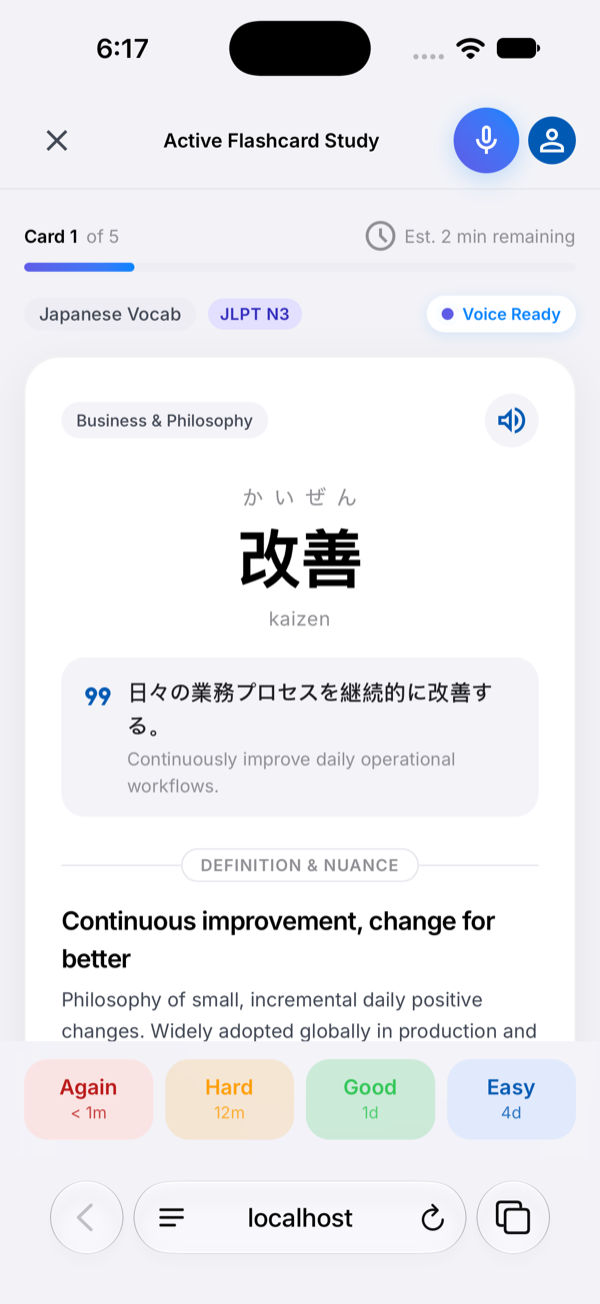
I audited every non-AI screen on an iPhone simulator. One deck showed 12 new and 45 due on the Library, yet held only 7 cards, and deck detail said 6 due. The answer sat under the question, so there was no recall step, and the grade buttons were below the fold. Three proto-personas came out of the audit, not interviews: an exam crammer, a busy professional and a lapsed learner, each with a journey map.
#03
Process & outcome
Audit, prioritize, ship quick wins, propose v2
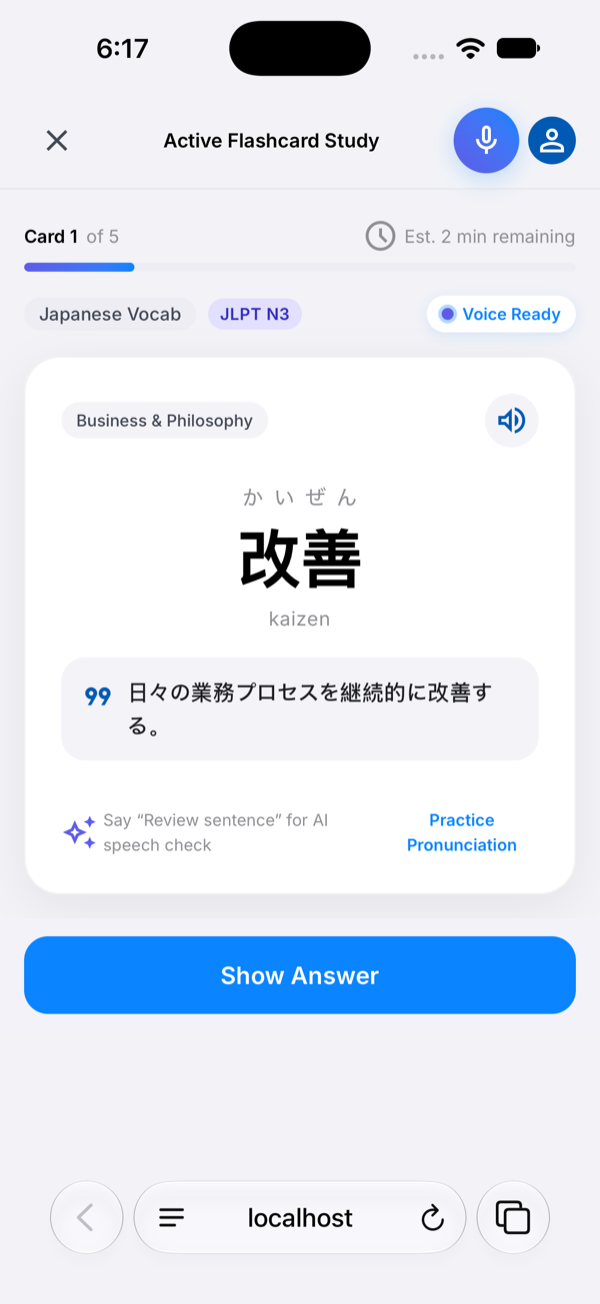
I went from the audit to personas, journey maps and an impact-versus-effort ranking, then wrote six user stories with acceptance criteria and MoSCoW priority. One pull request shipped the quick wins: honest due counts, a Show Answer step, pinned grades with swipe, due-only sessions and an “All caught up” end state. The proposed v2, not built yet, adds a Today screen, three tabs instead of four and a catch-up mode capped at 20 cards. The north star is weekly active review days.